
Heating & Cooling
Furnaces, boilers, heat pumps, mini splits, oil tanks, and central AC.
- LICENSED CT HVAC & MASTER PLUMBERS
- 24/7 DISPATCH
Furnace install, repair, and replacement
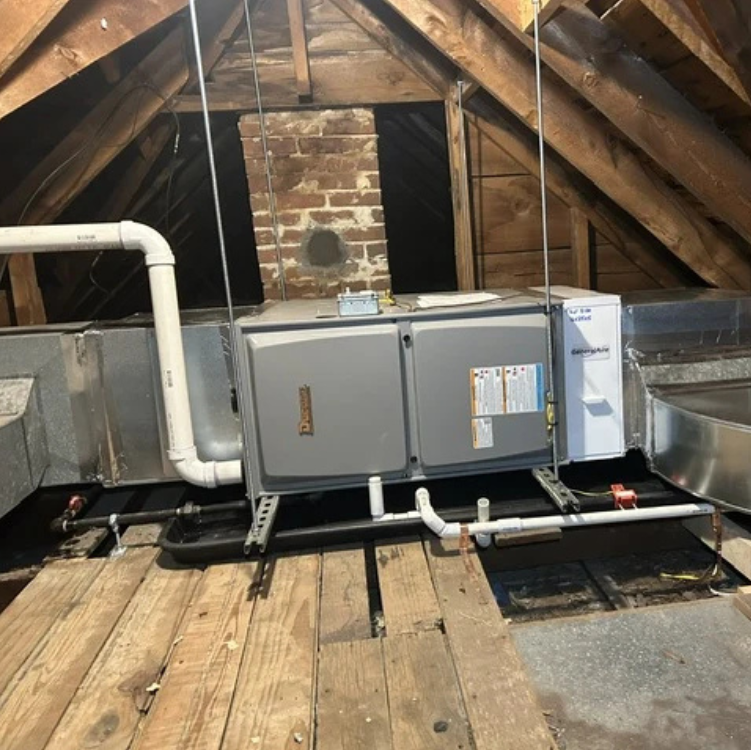
A furnace is the workhorse of most Eastern CT homes. Forced hot air, oil or natural gas or propane, runs hard from November through April and then sits idle for six months. When it quits, it usually quits on the coldest night of the year.
We service every brand sold in this market and replace the ones that aren’t worth saving. Common calls: no heat, short cycling, blower running but no flame, dirty filter strangling airflow, cracked heat exchanger, ignition or pilot trouble, thermostat acting up. We diagnose the problem on the first visit and quote the fix before we touch a wrench.
- Oil-fired forced-air furnaces (still common across Canterbury, Brooklyn, Hampton, and rural Windham County)
- Natural gas furnaces in town centers like Norwich, Plainfield, and Killingly
- Propane furnaces in homes off the gas main
- High-efficiency 95%+ AFUE replacements when the old unit isn't worth repairing
- Variable-speed and two-stage units for quieter, more even heat
- Short cycling
- Runs 60 seconds, shuts off, restarts a minute later
- Cold or lukewarm air
- Vents stay cool on a call for heat
- Yellow or flickering burner flame
- Should be steady blue — yellow is a combustion problem, often a safety issue
- Burning, electrical, or sulfur smell
- Especially on the first fire of the season
- Banging, rumbling, or screeching
- Bearings, blower wheel, or delayed ignition
- Soot or rust at the burner / flue
- Combustion or venting fault — needs inspection
- Carbon monoxide alarm sounding
- Leave the house and call us from outside
- Utility bills climbing year over year
- Same winter weather, higher bill — efficiency loss or oversize cycling
Boiler install, repair, and replacement
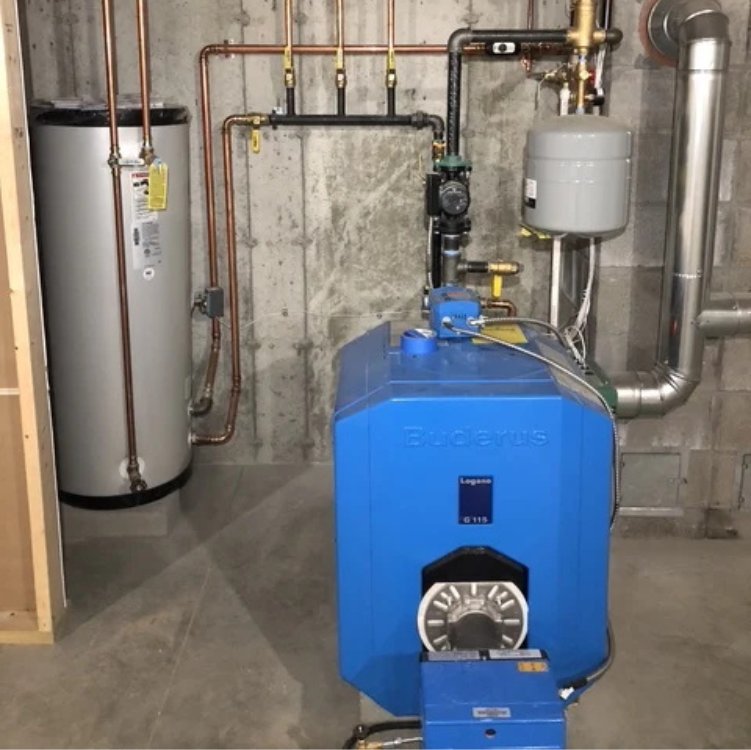
Boilers heat water and push it through baseboard, radiators, or radiant floor loops. They run quieter than forced air, hold heat longer, and last a long time when they’re maintained. A lot of Quiet Corner homes built before 1980 still run on their original cast iron boiler, which says something about the technology.
We work on oil-fired and gas-fired boilers, hot water and steam systems, and we replace the ones that have aged out or been condemned by code. Typical calls: no heat, low pressure, water hammer or banging pipes, leaking around the relief valve, zones not heating, circulator pump failure, expansion tank gone soft. Steam boilers come with their own list (low water cutoff, sight glass, gauge glass, header issues) and we handle those too.
- Hot water (hydronic) boilers, oil and gas
- Steam boilers, one-pipe and two-pipe systems
- Cast iron, fire-tube, and high-efficiency condensing units
- Radiant floor systems and zone valve repairs
- Indirect water heater hookups (boiler-fed hot water tanks)
- Combi boilers for heat plus on-demand domestic hot water
- No heat or uneven heat
- One zone warm while another stays cold
- Pressure out of range
- Gauge below 12 psi cold or climbing past 25 hot
- Water around the boiler
- Leaking near-boiler piping, relief valve, or pump seal
- Banging, hammering, or kettling
- Often scale buildup or low circulator flow
- Auto-feeder cycling constantly
- A hidden leak somewhere in the loop pulling water in
- Circulator runs but rooms stay cold
- Zone valve, expansion tank, or flow issue
- Cloudy or low sight glass (steam)
- Low-water cutoff fault or boiler flooding
- Rust on the jacket or flue
- Condensate corrosion — common on undersized chimneys
Heat pump installation and service
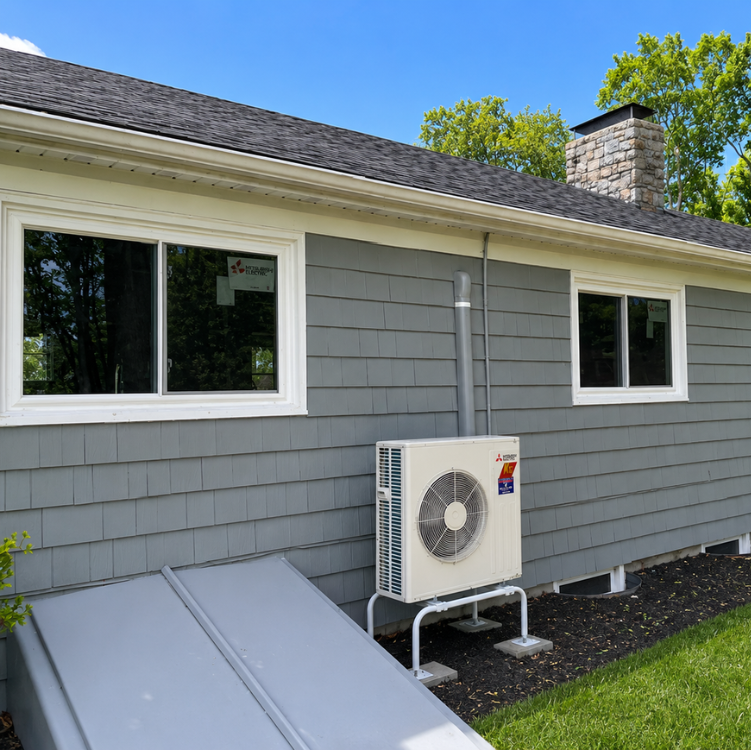
Heat pumps are the single biggest change in residential heating since natural gas hit the suburbs. Modern cold-climate heat pumps work down to negative temperatures, run on electricity (so they double as your AC), and qualify for some of the largest rebates in Connecticut’s history. We’ve installed dozens across the Quiet Corner, from full-house electrification jobs in Canterbury to single-zone backups in Scotland and Voluntown.
The “heat pumps don’t work in cold weather” myth, settled
The thirty-year-old heat pump on the back of a 1990s ranch did struggle below freezing. The cold-climate models we install today are a different machine. NEEP-rated units (Northeast Energy Efficiency Partnerships) like Mitsubishi Hyper-Heat and Bryant Evolution Extreme deliver full heating capacity at 5 degrees and continue producing heat below zero. Real Eastern CT winters, not lab conditions. We have customers in Pomfret and Woodstock running heat pumps as their primary heat through January with no backup needed, and others pairing them with their existing oil or gas furnace as a hybrid setup that switches over only when it makes economic sense.
The rebate situation, plainly
Two stacked programs make heat pumps the most subsidized residential equipment on the market right now. We file the paperwork on the Energize CT side. The federal credit you claim on your own taxes (we give you the documentation).
- Federal 25C tax credit: Up to $2,000 back on a qualifying heat pump install, claimed on your federal return the year of installation. No income cap.
- Energize CT residential heat pump rebates (Eversource and United Illuminating, funded by your monthly utility bill whether you use them or not): Rebates currently run up to $15,000 on whole-home cold-climate heat pump installs, with smaller rebates for single-zone and partial-home setups. Income-eligible households can stack additional incentives.
- Heat Pump Water Heater rebate (separate program): Energize CT covers a chunk of a heat pump water heater replacement. We can quote one when we’re already on site for the heating job.
Programs change. We confirm the current rebate amounts and eligibility for your specific home before we quote the job. Nobody likes a number that moves on them.
- Cold-climate ducted heat pumps (full central system replacement)
- Ductless mini split heat pumps (zoned, one to eight heads)
- Hybrid / dual-fuel systems pairing a heat pump with an existing furnace or boiler
- Air-to-water heat pumps for hydronic-baseboard homes (less common but growing)
- NEEP cold-climate certification
- Published capacity at 5°F — not just the 47°F marketing number
- Variable-capacity inverter compressor
- Modulates to match load instead of slamming on and off
- HSPF2 rating of 8.1 or higher
- Current SEER2 / HSPF2 standard (replaced HSPF in 2023)
- Published low-temperature performance
- If the spec sheet doesn't list capacity at 5°F, it isn't cold-climate
- Manual J load calculation
- Sized by actual load, not square footage shortcuts
- Contractor files Energize CT paperwork
- We file the rebate paperwork on your behalf and hand you the federal 25C documentation
Ductless mini split installation and service
A ductless mini split is a heat pump in a different package, so much of what’s above applies here too. The difference is the form factor. Instead of one big outdoor unit feeding ductwork through the basement, a mini split runs refrigerant lines to small wall, ceiling, or floor heads in each room you want conditioned. No ducts. No torn-up walls. Each head is its own zone with its own thermostat.
Sizing matters more than most contractors admit. An oversized mini split short-cycles, runs humid in summer, and never settles into the steady-state efficiency it was sold on. We do a Manual J load calculation for every install, not a square-footage shortcut. Two homes the same size can need different equipment depending on insulation, window quality, and orientation.
The same federal 25C credit and Energize CT rebates listed in the heat pump section apply to mini splits, since they’re heat pumps.
- Old farmhouses in Hampton, Scotland, or Sterling that never had ductwork
- Finished basements, garages, additions, sunrooms, and converted attics
- Bedrooms over the garage that always run hot in summer and cold in winter
- Whole-house systems where you want different zones at different temperatures
- Homes where the boiler still works fine and you just want efficient cooling plus shoulder-season heat
- Manual J load calculation per zone
- Sized to actual load, not a square-footage shortcut
- Line set length verified to spec
- Long runs and vertical lifts need a charge adjustment, not a guess
- Vacuum pulled to 500 microns
- Held before the system gets charged — skipping this is why installs fail two summers in
- Refrigerant charge weighed in
- On a scale, never topped up "by feel"
- Condensate routed to a drain or pump
- Never spilled outside where it freezes back up the wall
- Line set covered with painted line-hide
- Not a wrap of foam tape and zip ties
- Outdoor unit lifted above snow depth
- Level pad with vibration isolator, clear of typical Eastern CT snowfall
Central AC install, repair, and replacement
If your house has ductwork and you want one thermostat to handle the whole place, central AC is still the most cost-effective way to cool it. We service every major brand and replace condensers, coils, and full systems when the existing equipment is past saving.
“Should I repair it or replace it?” The honest answer depends on the age of the unit and the refrigerant it runs. Systems from 2010 and earlier often run on R-22 refrigerant, which is no longer manufactured. R-22 has climbed year over year since phase-out and is now priced like a rare metal at the wholesaler, so a serious leak in an old R-22 system can make replacement cheaper than the repair itself within a single visit. Anything 15+ years old is on borrowed time regardless. We’ll quote both options and tell you straight which way the math goes.
“What size system do I need?” Bigger is not better. An oversized AC cools fast, shuts off, leaves humidity behind, and short-cycles itself to an early grave. We do a Manual J load calc, same as with mini splits.
- Full central AC replacement (condenser, coil, line set)
- Coil and condenser swaps when one side of the system is salvageable
- Refrigerant leak diagnosis and repair (R-410A and the newer R-454B systems)
- Capacitor, contactor, and blower motor replacements
- Annual cooling tune-ups (see the maintenance plan below)
- Refrigerant pressures
- Read against the manufacturer's chart for the model — not generic numbers
- Superheat and subcooling
- The two readings that confirm the charge is actually correct
- Capacitor microfarads
- Measured against the rated MFD — weak capacitor is the #1 "AC won't start" cause
- Contactor wear
- Inspected for pitting, arcing, and chatter
- Coil condition (both sides)
- Evaporator and condenser checked for restriction, dirt, bent fins
- Blower amp draw
- Measured against the nameplate FLA
- Condensate drain
- Pulled and flushed — most common cause of indoor leaks
- Refrigerant leak check
- On any system that's lost charge — adding refrigerant without finding the leak just funds the leak
The Caswell maintenance plan
Two visits a year (one in the spring for cooling, one in the fall for heating), priority dispatch on emergency calls, and a discount on parts and labor when something does break. It’s the boring, repeatable work that keeps a furnace running 18 years instead of 12 and an AC running 15 years instead of 9.
What's included
- Spring AC tune-up (refrigerant, capacitor check, coil clean, condensate)
- Fall heating tune-up (combustion analysis, safety check, filter, blower)
- Priority scheduling, jump the line on emergency calls
- 15% off parts and labor on any non-plan service call
- Two-year workmanship warranty extended to three on plan work
No heat. No AC in a heat wave. Cracked heat exchanger.
Live dispatcher every hour of every year. A licensed tech rolling inside the hour for confirmed heating and cooling emergencies across Eastern Connecticut.
Not quite what you're looking for?
Common questions
Grouped by sub-topic. Real questions from the dispatch board. If yours isn't here, call and ask.
Heating
Do heat pumps actually work in Connecticut winters?
Yes, if you install the right kind. Cold-climate heat pumps rated by NEEP (Northeast Energy Efficiency Partnerships) are tested to deliver full heating capacity at 5 degrees and continue producing usable heat below zero. We have customers in Pomfret and Woodstock running modern cold-climate heat pumps as their primary heat through Eastern CT winters. The “heat pumps don’t work in the cold” line is based on equipment from the 1990s, not what’s available today.
How long should a furnace last in Eastern CT?
A well-maintained gas or oil furnace runs 15 to 20 years. A neglected one (skipped tune-ups, dirty filters, no combustion analysis) is lucky to make 12. Once a furnace is past 15 years old and starts asking for major repairs, it’s usually smarter to put that money toward a replacement. We give you the math both ways before you decide.
Boiler vs furnace, what's the difference and which one do I have?
A furnace heats air and blows it through ducts to vents in each room. A boiler heats water and pushes it through baseboard, radiators, or radiant floors. If your heat comes out of metal fins along the baseboard or out of cast iron radiators, you have a boiler. If it comes out of rectangular floor or wall vents with air rushing through, you have a furnace. We work on both.
How do you quote a furnace replacement in Eastern CT?
Every furnace replacement starts with a site visit. Too many variables move the number to quote it over the phone honestly — efficiency level (80% vs 95%+ AFUE), fuel type (gas, oil, or propane), venting changes, gas-line work, electrical, old-unit removal, permit pull, and whether you’re matching a new AC at the same time. You get a flat-rate written quote with line items, our CT license number, warranty terms, and a fixed start date. No surprise add-ons after the work starts.
Cooling
My central AC is leaking refrigerant. Repair or replace?
It depends on age and refrigerant type. If your system is from 2010 or earlier it likely runs R-22, which is no longer manufactured. R-22 prices have climbed every year since phase-out and a serious leak in an old R-22 system can make replacement cheaper than the repair itself. Newer R-410A systems are still worth repairing in most cases, and the latest R-454B systems are repairable too. We’ll quote both options and tell you which way the math actually goes.
What size mini split do I need for one room?
It depends on more than square footage. Insulation, windows, ceiling height, sun exposure, and what’s above and below the room all matter. A 12,000 BTU head is roughly right for 400 to 600 square feet in average construction, but we run a Manual J load calculation before we quote, because oversizing a mini split kills its efficiency and humidity control. The cheapest-to-run system is the one that’s correctly sized.
General
What rebates and tax credits are available on heat pumps and mini splits?
Two stacked programs. The federal 25C tax credit gives you up to $2,000 back on a qualifying heat pump install, claimed on your tax return for the install year. On top of that, Energize CT (funded through Eversource and United Illuminating) offers residential heat pump rebates up to $15,000 for whole-home cold-climate installs, with smaller rebates for single-zone systems. Income-eligible households can stack additional incentives. We file the Energize CT paperwork. You claim the federal credit. Programs change, so we confirm current amounts before we quote.
How often should I have my heating and cooling system serviced?
Twice a year. Once in the spring for the AC or cooling side of a heat pump, once in the fall for the furnace, boiler, or heating side. A tune-up catches small problems (weak capacitor, low refrigerant, cracked igniter) before they become 2 a.m. failures. Our maintenance plan bundles both visits, gives you priority dispatch, and discounts parts and labor on anything else.
Do you serve my town?
We dispatch across the Quiet Corner and Eastern Connecticut. Canterbury, Plainfield, Brooklyn, Scotland, Hampton, Lisbon, Sprague, Griswold, Norwich, Windham, Pomfret, Killingly, Woodstock, Putnam, Sterling, and Voluntown are all inside our standard service radius. If your town isn’t on the list, call and we’ll tell you straight whether we can get to you.
Are you licensed and insured?
Yes. Caswell & Sons holds CT Master Plumber and CT Refrigeration / HVAC licenses (CT Master Plumber PLM.0288811-P1, CT Master HVAC HTG.0308674-D1, CT Home Improvement HIC.0631814) and carries full liability and workers’ comp insurance. We’re 16 years in. License numbers and insurance certificates are on every quote we hand you.
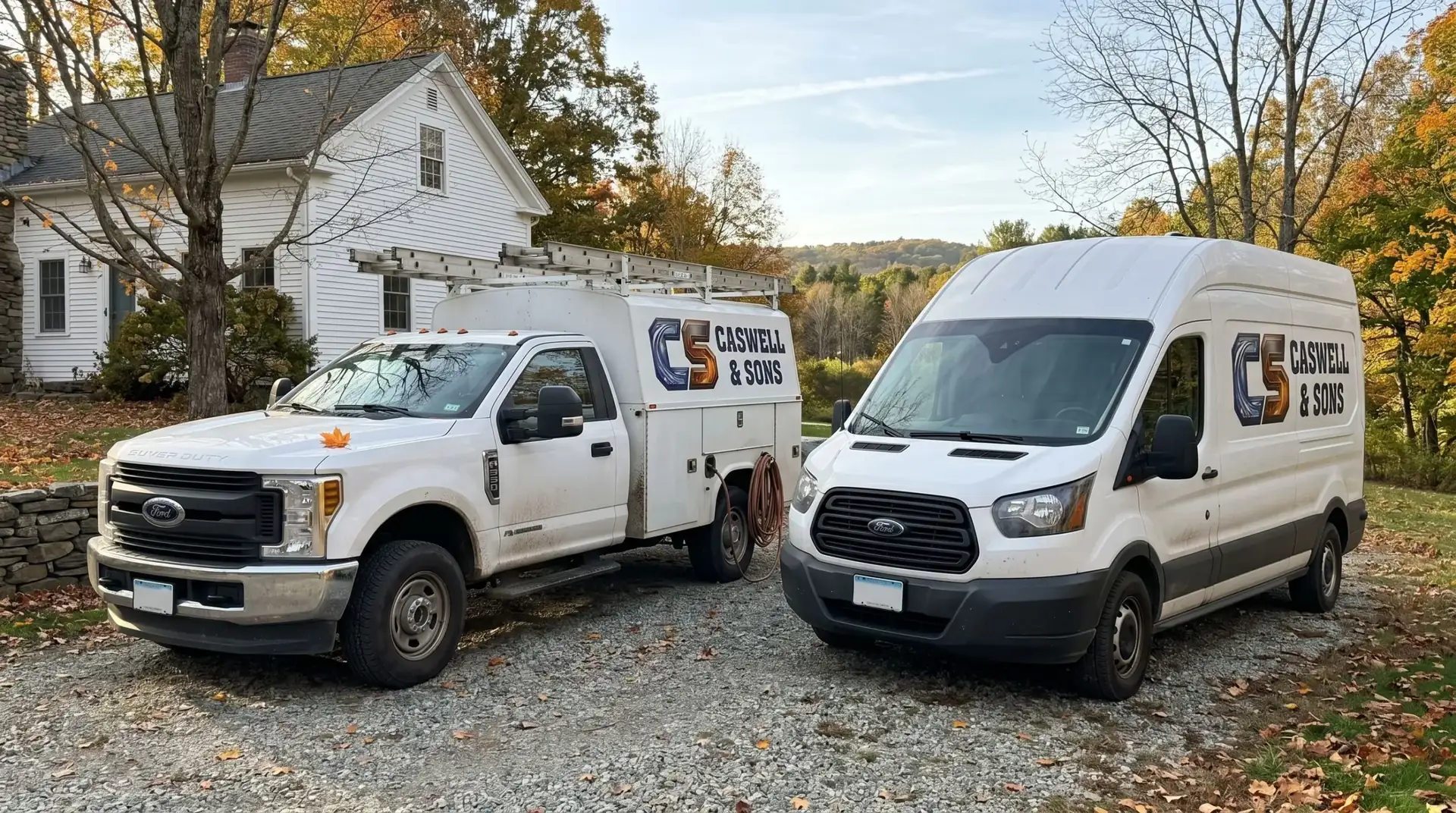
Where we work
We dispatch across the Quiet Corner and Eastern Connecticut. If your town is on the list, you are inside our standard radius. If it is not, call and ask. We add and drop towns based on where the crews are working that week.
- Andover
- Ashford
- Bozrah
- Brooklyn
- Canterbury
- Chaplin
- Colchester
- Columbia
- Coventry
- Eastford
- Franklin
- Griswold (Jewett City)
- Hampton
- Hebron
- Killingly (incl. Danielson)
- Lebanon
- Lisbon
- Mansfield (incl. Storrs)
- Montville
- North Stonington
- Norwich
- Plainfield
- Pomfret
- Preston
- Putnam
- Salem
- Scotland
- Sprague (Baltic)
- Sterling
- Thompson
- Tolland
- Voluntown
- Willington
- Windham (incl. Willimantic)
- Woodstock
Heating or cooling problem? Get a master plumber on the truck.
Tell us what's going on with the heat or AC. We'll quote the work, schedule the visit, and dispatch a licensed tech. Emergency response or standard service.