Skip to content
WATER HEATERS IN EASTERN CT

Water Heater Install, Repair, and Replacement

Tank, tankless, and heat-pump systems. Same-day service most days, emergency dispatch when the tank lets go on a Sunday.

SYSTEMS WE INSTALL

Four kinds of water heaters. We install and service all of them.

What you should put back in is rarely the same thing you took out. Tank prices are stable, tankless has gotten dramatically better in the last decade, and heat-pump units now qualify for a federal tax credit that can knock a thousand dollars off the bill. We walk you through what fits your house, your gas service, and your hot-water habits.

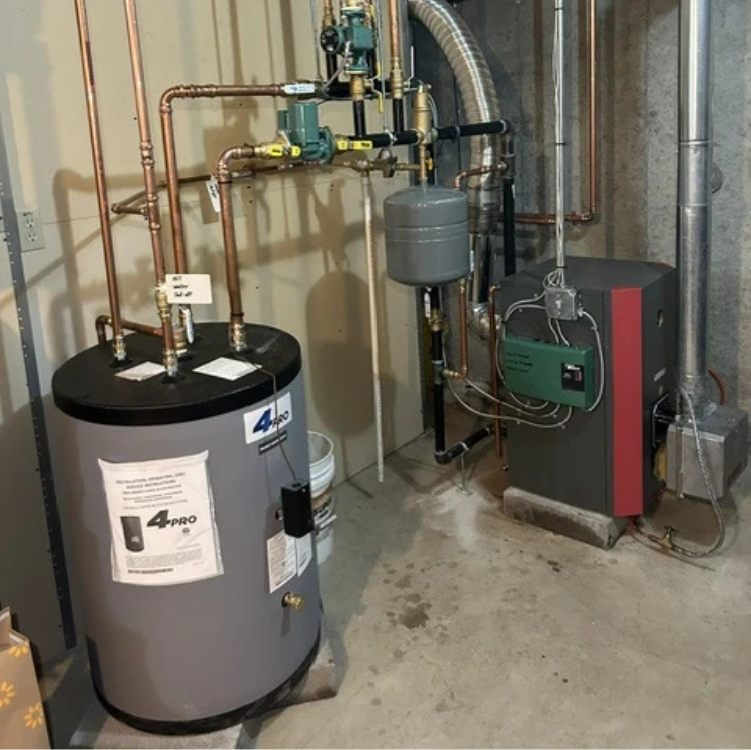
Tank (Gas + Electric)

The default for most Eastern CT homes. 40, 50, or 75 gallons, gas-fired or electric. Simplest install, predictable lifespan, lowest upfront investment.

Lifespan
8 to 12 years (less on a well due to sediment)
Best for
2 to 4 bedroom homes, like-for-like swaps
Recovery (sustained)
0.5 to 1.0 GPM, tank reheats between draws
What we install Bradford White, Rheem, A.O. Smith

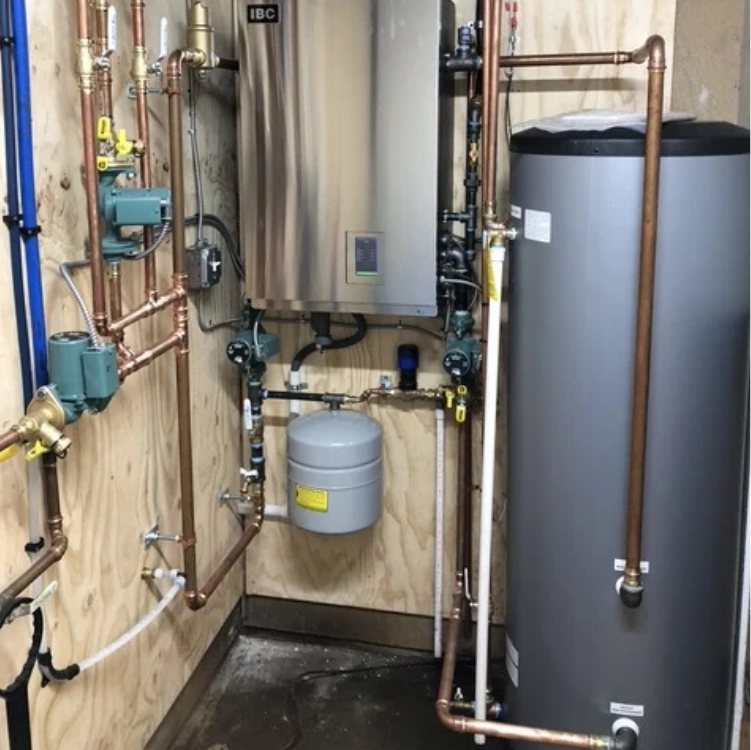
Tankless

Wall-mounted, on-demand, endless hot water. Longer lifespan, no standby loss. Needs proper gas sizing and venting to perform the way the spec sheet promises.

Lifespan
20+ years with annual descaling
Best for
Larger families, multiple simultaneous demands, basements where floor space matters
Recovery (continuous)
4 to 8 GPM, no run-out
What we install Rinnai, Navien, Bosch

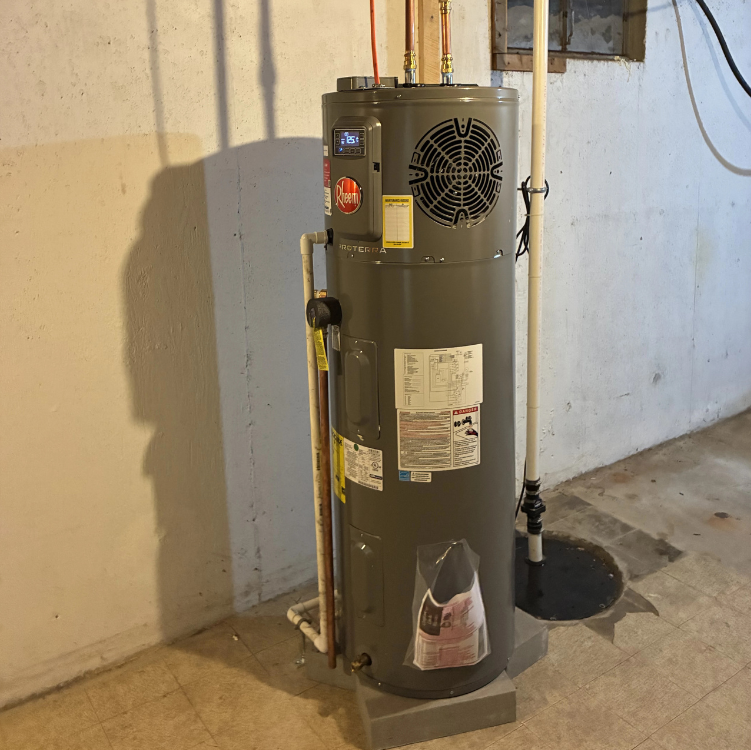
Heat Pump / Hybrid

Pulls heat from the surrounding basement air to heat your water. Two to three times more efficient than a standard electric tank. Qualifies for the federal 25C tax credit and Energize CT rebates.

Efficiency (UEF)
3.0 to 4.0 — 3× to 4× a standard electric tank
Best for
All-electric homes, efficiency-focused owners, basements with enough volume and warmth
Lifespan
10 to 15 years
What we install Rheem ProTerra, A.O. Smith, Bradford White

Power-Vent / Direct-Vent

For homes without a traditional chimney or where the unit sits in a tight mechanical room. Uses a fan to vent combustion gases safely through a side wall.

Venting
Side-wall PVC, no chimney required
Best for
Finished basements, additions, conversions where natural-draft no longer meets code
Lifespan
8 to 12 years
What we install Bradford White, Rheem, A.O. Smith
TANK VS TANKLESS VS HEAT PUMP

How they actually compare.

The honest answer to “which one should I get” is “it depends on your house.” Here is the side-by-side we walk every customer through before quoting the job. The specs below are the metrics that actually drive the long-run decision — energy factor, standby heat loss, sustained recovery, lifespan, and what the unit demands from your house in space, gas service, and electrical capacity. We do not publish pricing on the site; every quote is flat-rate and written after a site visit.

Spec Spec Tank (Gas / Electric) Tankless Heat Pump / Hybrid
Install investment tier Lowest Highest Mid (offset by rebates)
Lifespan 8 to 12 years 20+ years with annual descaling 10 to 15 years
Energy factor (UEF) 0.60 to 0.70 0.93 to 0.98 3.0 to 4.0 (over 1.0 because it's a heat pump)
Standby heat loss 15 to 25% (gas) / 12 to 20% (electric) None — heats only on demand 3 to 8%
Recovery rate (sustained) 0.5 to 1.0 GPM (tank reheats) 4 to 8 GPM continuous 0.5 to 0.8 GPM (tank reheats)
Space required Full footprint (~2' x 2', 5' tall) Wall-mounted (~2' x 1.5') Full footprint plus ~1,000 cu ft surrounding air volume
Gas service required Standard residential 3/4" line + higher BTU service None (all-electric)
Electrical service required Standard Standard (electric ignition only) Dedicated 240V circuit
Federal 25C tax credit eligible No Yes (qualifying high-efficiency gas, capped at $600) Yes (up to 30%, capped at $2,000)
Best for household size 2 to 4 people 3 to 6+ people, simultaneous demand 1 to 4 people, efficiency-focused

Specs reflect typical Eastern Connecticut installs. Your home's gas service, venting, electrical panel capacity, and existing plumbing layout determine which type fits. Caswell quotes flat-rate, in writing, after a site visit.

COMMON PROBLEMS

If any of this sounds familiar, call.

<p>Most water heater problems show up gradually, then escalate fast. Catch them early and you usually get repair pricing. Wait until the basement is wet and you are buying a replacement on the same day.</p>

  • No hot water at all Pilot, ignition, thermostat, or breaker. We diagnose on the call when we can.
  • Not enough hot water Undersized unit, failed dip tube, or sediment killing capacity.
  • Leaking tank or fittings Corroded tank body, failed T&P valve, or a loose union. One is a repair, one is a replacement.
  • Rusty or discolored water Anode rod is spent and the tank is rusting from the inside out.
  • Popping or rumbling noises Sediment buildup on the burner or element, especially on well water.
  • Pilot won't stay lit Thermocouple, gas valve, or a venting issue starving the burner.
REPAIR OR REPLACE

Repair it, or replace it?

The break-even rule of thumb: if your tank is over ten years old and the repair runs more than half the cost of replacement, replace it. We tell you straight which side of the line your unit is on before we write up the work.

Repair if

  • Unit is under 8 years old and the warranty is still active
  • The failure is a serviceable part (thermocouple, gas valve, element, T&P valve, anode rod)
  • The tank itself is sound, no rust streaks, no weeping seams
  • You just replaced it and the install is still under workmanship warranty

Replace if

  • Unit is 10+ years old (most tanks fail between 8 and 12)
  • You see rust at the bottom of the tank, around fittings, or in the hot water
  • The tank is leaking from the body, not the fittings
  • You are upgrading capacity or switching fuel types
  • Energy bills have crept up year over year on the same usage
TANKLESS DEEP DIVE

Endless hot water, half the footprint.

A tankless unit heats water as you use it instead of storing 50 gallons hot all day. You stop paying to keep water warm overnight. You stop running out during the third shower. The unit hangs on the wall and gives you back the floor space the old tank occupied.

Tankless is not the right call for every house. It needs proper gas sizing (most need a 3/4-inch gas line and a higher BTU service than a tank), a stainless venting kit, and condensate handling. Done right, a tankless will run twenty years. Done wrong, it scales up, short-cycles, and the homeowner blames the technology.

We install Rinnai and Navien as our two go-to lines, both of which carry strong factory warranties and parts availability in Connecticut. Many high-efficiency models qualify for the federal 25C tax credit (currently up to 30% of installed cost, capped at $600 for gas tankless units — we confirm current program amounts before we quote). We size, install, vent, and commission everything ourselves. No subcontractors.

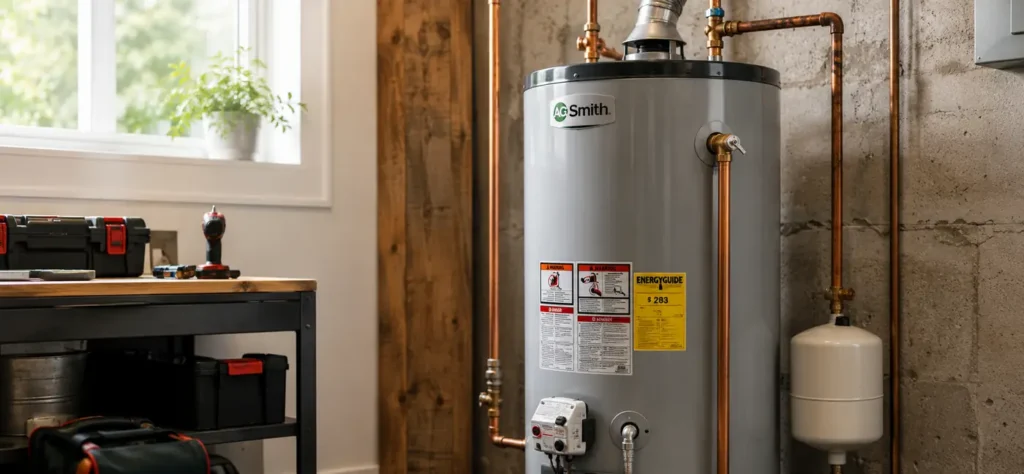
Gas water heater and expansion tank installed in a basement
Brands we stock, install, and service.
PLM.0288811-P1 HTG.0308674-D1 HIC.0631814
MAINTENANCE PLAN

Annual flush, anode check, peace of mind.

A water heater that gets flushed once a year and inspected for anode wear lasts three to five years longer than one that runs untouched. Our maintenance plan covers an annual flush, anode rod check, T&P valve test, and a written report on the unit’s remaining life. Members get priority dispatch and a discount on parts when something does need replacing.

What's included

  • Annual tank flush (sediment removed before it bakes onto the element)
  • Anode rod inspection and replacement when worn
  • T&P relief valve test
  • Tankless descaling for members on tankless units
  • Written report on remaining unit life
  • Priority dispatch and parts discount when something does fail
See plan details
FAQS

Water heater questions, answered.

Real questions from the dispatch board. Short answers. If yours isn't here, call and ask.

How long does a water heater last?

A standard tank water heater lasts 8 to 12 years on municipal water and slightly less on a well, where sediment and minerals shorten anode-rod life. Tankless units routinely hit 20 years with annual descaling. Heat-pump hybrids land in the 10 to 15 year range. If your unit is over 10 and you are smelling rust in the hot water or seeing weeping at the base, start budgeting for replacement.

When should I replace instead of repair?

Three rules. (1) If the tank itself is leaking (not just a fitting), replace. A tank breach cannot be patched. (2) If the unit is over 10 years old and the repair quote is more than half of replacement, replace. (3) If you are on the second or third major repair in 18 months, you are throwing money at a unit that wants to retire. We will tell you straight which side of the line you are on before we start the work.

Is a tankless water heater worth it in Connecticut?

For most 3+ bedroom Quiet Corner homes, yes, but only if your gas service supports it and your hot-water habits actually benefit. Tankless wins when you have multiple simultaneous demands (two showers, a dishwasher, a load of laundry) or when you hate running out of hot water. It also wins on lifespan: a Rinnai or Navien properly installed and flushed once a year will outlast two tanks back to back. It is not the right call for a small electric-only home with a 100-amp panel and one bathroom.

Are there rebates or tax credits for water heaters in CT?

Yes, and they matter. The federal 25C tax credit (Inflation Reduction Act) covers up to 30% of installed cost on qualifying high-efficiency gas tankless units (capped at $600) and on heat-pump water heaters (capped at $2,000). Energize CT and Eversource also run rebate programs on heat-pump water heaters that can stack with the federal credit, often putting another $400 to $750 back in your pocket. We pull current incentive numbers when we quote.

How does hard water or well water affect my water heater?

A lot. Sediment and minerals settle in the bottom of the tank and bake onto the heating element or burner, which makes the popping and rumbling noises and shortens lifespan. On a well, plan on an annual flush and an anode rod check every two years. Tankless units on well water need descaling once a year, no exceptions. Skip it and the heat exchanger scales up and the unit short-cycles. If your water is testing hard above 7 grains per gallon, a softener pays for itself in extended water-heater life alone.

SERVICE AREA

Where we work

We dispatch across the Quiet Corner and Eastern Connecticut. If your town is on the list, you are inside our standard radius. If it is not, call and ask. We add and drop towns based on where the crews are working that week.

HOT WATER OUT?

We answer the phone. We show up. We fix it.

Tell us what you have and what you want back. We will give you a flat-rate quote, schedule the visit, and dispatch a licensed plumber. Most replacements happen within 48 hours. Emergencies are same day.